Rosé all May
Bandol, Tavel, Rioja, Navarra, Bordeaux Clairet, Cerasuolo d'Abruzzo and beyond

It’s officially rosé season. Time for patios, long evenings, and a color palette that ranges from pale salmon to the deepest pink.
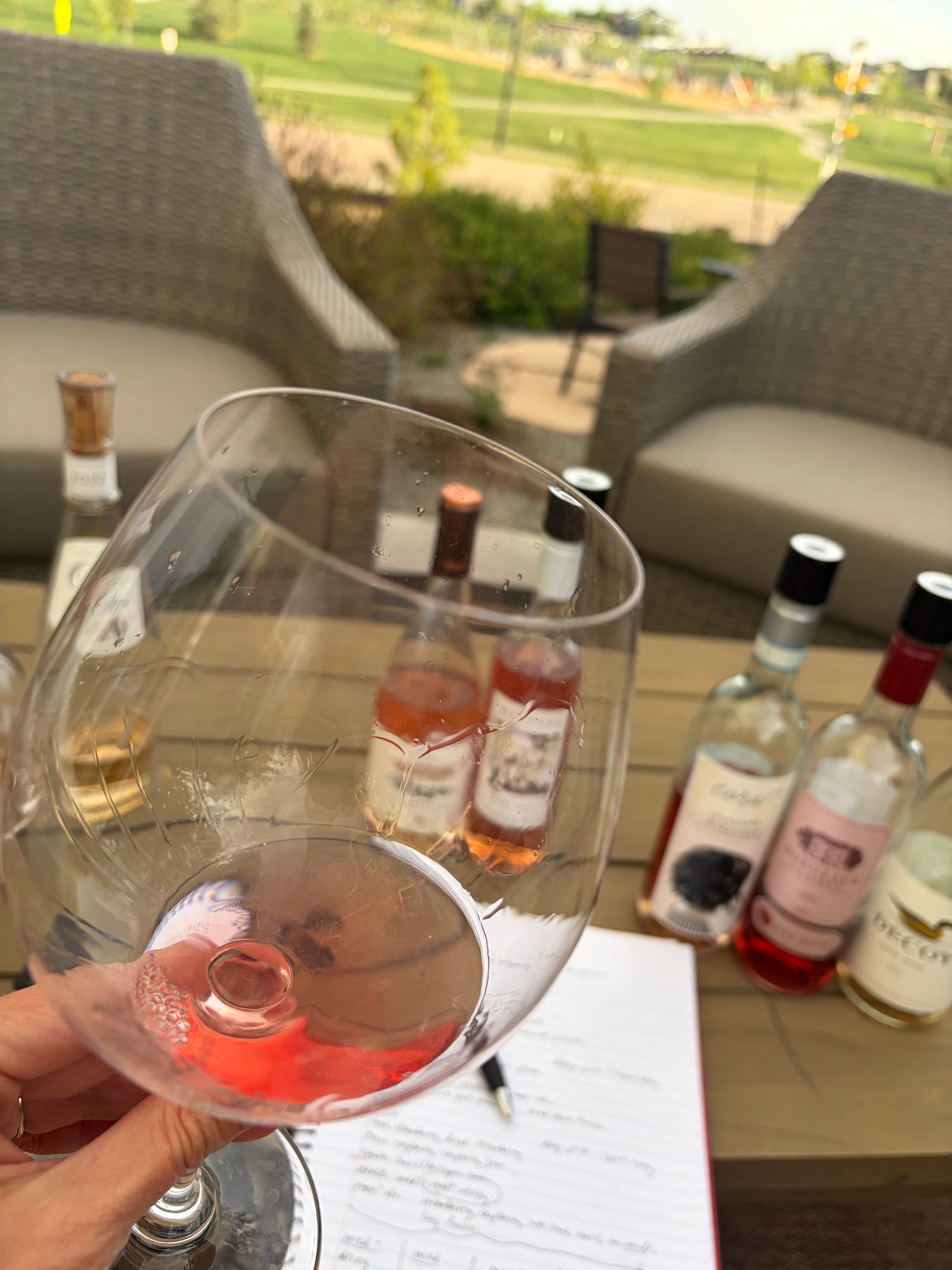
I recently participated in an event with GuildSomm and Ruinart where rosé wines were the focus. I prepared for the event over the course of a few months. With the help of my Coravin, I was able to taste nine rosé wines multiple times. This edition of Wine Notes summarizes that work and offers an inside look at several major rosé styles.
Place
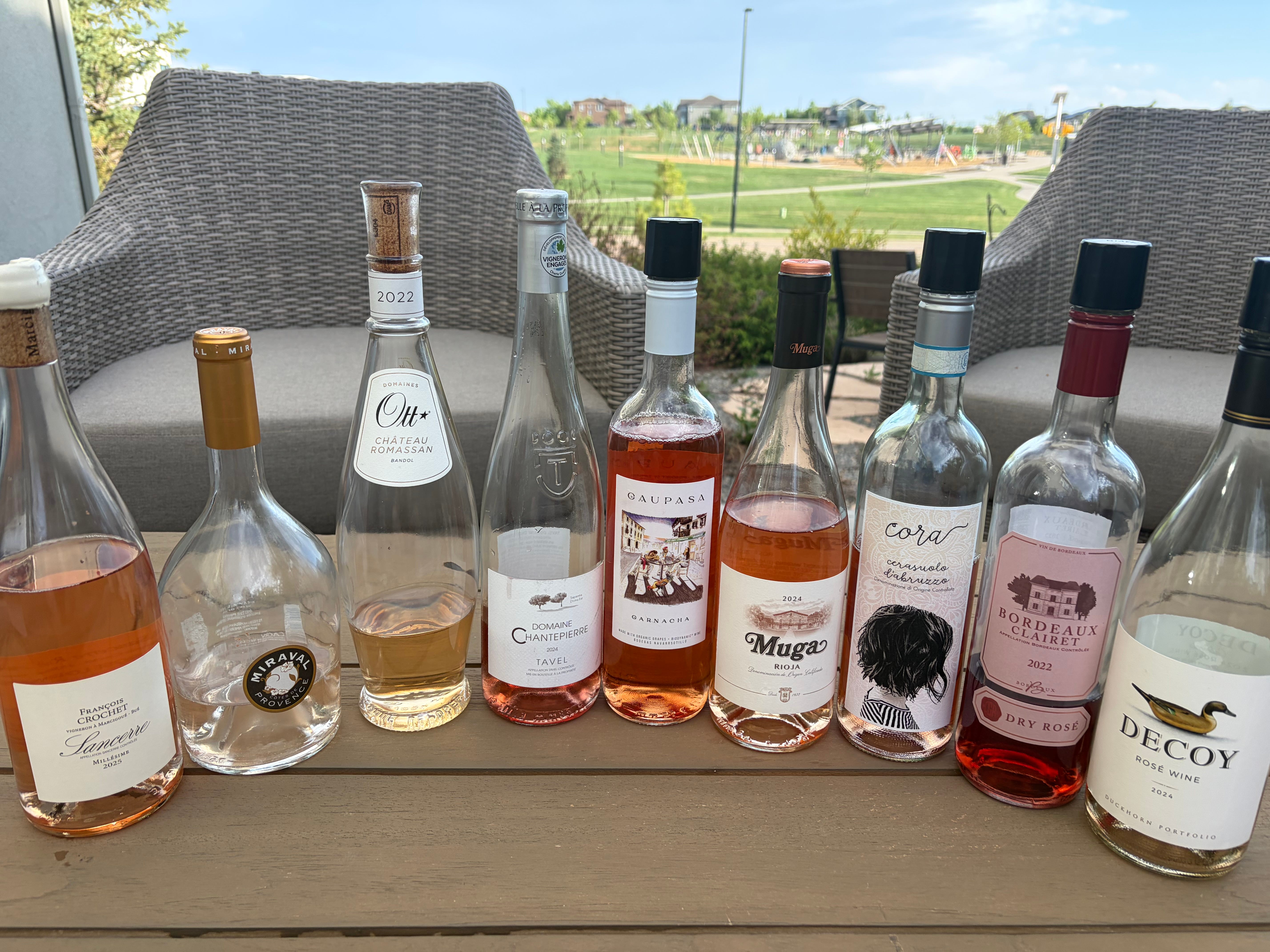
For today, nine major regions/bottles from four countries:
France: Sancerre, Bordeaux, Tavel, Provence and Bandol (an appellation within Provence focused on Mourvèdre)
Spain: Rioja and Navarra
Italy: the ever-popular rosé from Cerasuolo d’Abruzzo
United States: California
Grapes
Rosé can be made from nearly any black/red grape varietal. Its lighter color comes from minimal contact with grape skins during the early stages of fermentation.
Rosé can also be made by blending red and white grapes together, though this is less common outside of certain regional traditions. One example is the Rioja rosé I describe below (Muga Rosado 2024), a blend of 60% Garnacha and 40% Viura (a white grape).
Across these 9 bottles, the following grapes are represented: Pinot Noir, Merlot, Cabernet Sauvignon, Grenache/Garnacha, Syrah, Mourvèdre, Cinsault, Montepulciano and Viura.
How does orange wine fit into this conversation? Orange wine is made from white grapes that spend time with grape skins during the early stages of fermentation (hence the “skin contact” subheading we often see on wine menus these days).
Bottles
France:
Francois Crochet, Sancerre, 2025 (Pinot Noir). Notes of tart cranberry, unripe strawberry, and grapefruit zest. On the palate: refreshingly high acid, mineral notes, and grapefruit-pith bitterness. ($30)
Chevalier du Grand Robert, Bordeaux Clairet, 2022 (Merlot-based). Deep cherry-red in color. Notes of red plum, cherry, and a touch of vanilla/brown sugar. On the palate: medium acidity, fresh red fruit, and a soft, approachable finish. ($16)
Miraval, Cotes de Provence, 2025 (Grenache-based). Fragrant peach, fresh strawberry, and perfumed white flowers (honeysuckle, lily). On the palate: medium+ acidity with lingering white peach notes. ($18)
Domaines Ott, Chateau Romassan, Bandol, 2022 (Mourvèdre-based). Mourvèdre adds savory depth here: Olive brine, sea spray, blood orange, muted strawberry. Palate is dry, medium acidity, and dense mineral notes that linger, finishing with broad texture and impressive length. ($51). This wine was featured in The Devil Wears Prada II.
Domaine Chantepierre, Tavel, 2024 (Grenache, Cinsault, Syrah). We’re in the warmer Southern Rhône now, with expressive fruit to match: sweet strawberry, raspberry jam, basil, and tarragon. On the palate: full-bodied, medium+ acidity, ripe red fruit, and lingering herbal/mineral notes. ($18 — a steal for Tavel)
Spain:
Bodegas Navarrsotillo Guapasa, Navarra, 2024 (Garnacha). Deep pink in color. Ripe cherry, strawberry, and raspberry notes, with an initial hint of funky tilled earth. Dry, medium-acid, and fruit-forward on the finish. ($15)
Muga, Rioja, 2024 (60% Garnacha, 40% Viura). The Viura adds citrus tones (lemon and orange) alongside tart strawberry and raspberry from the Garnacha. Medium+ acidity with lingering strawberry, citrus, and mineral notes. ($17)
Italy:
Cora, Cerasuolo d’Abruzzo, 2024 (Montepulciano). Watermelon rind, bing cherry, orange zest, basil, and watermelon candy. On the palate: medium+ acidity, subtle phenolic grip, and grapefruit-pith-like bitterness. ($14)
United States:
Decoy (Duckhorn Portfolio), California, 2024 (Syrah-based). Sweet strawberry, raspberry, elderflower, light tropical lift (guava). On the palate: medium- acidity, ripe fruit, and slightly elevated alcohol. ($16.50)
Shopping help
Here is a Google doc with all of the bottles listed above. I’ve also included an extra note explaining why I like each wine — and the context in which I’d most want to drink it.
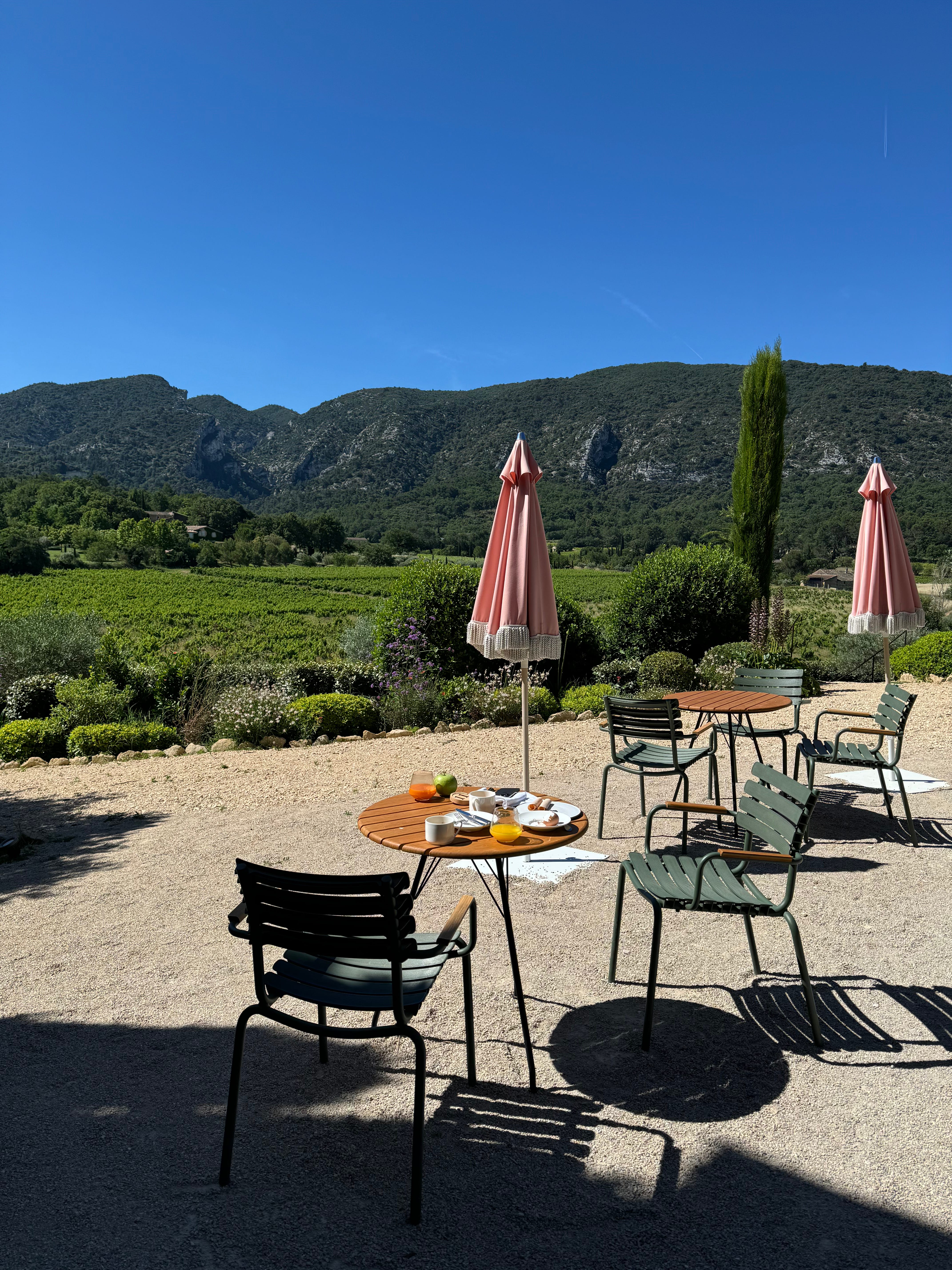
To close, I offer you a quote from Dave & David, two Americans living in an 18th-century farmhouse and olive orchard in the heart of Provence:
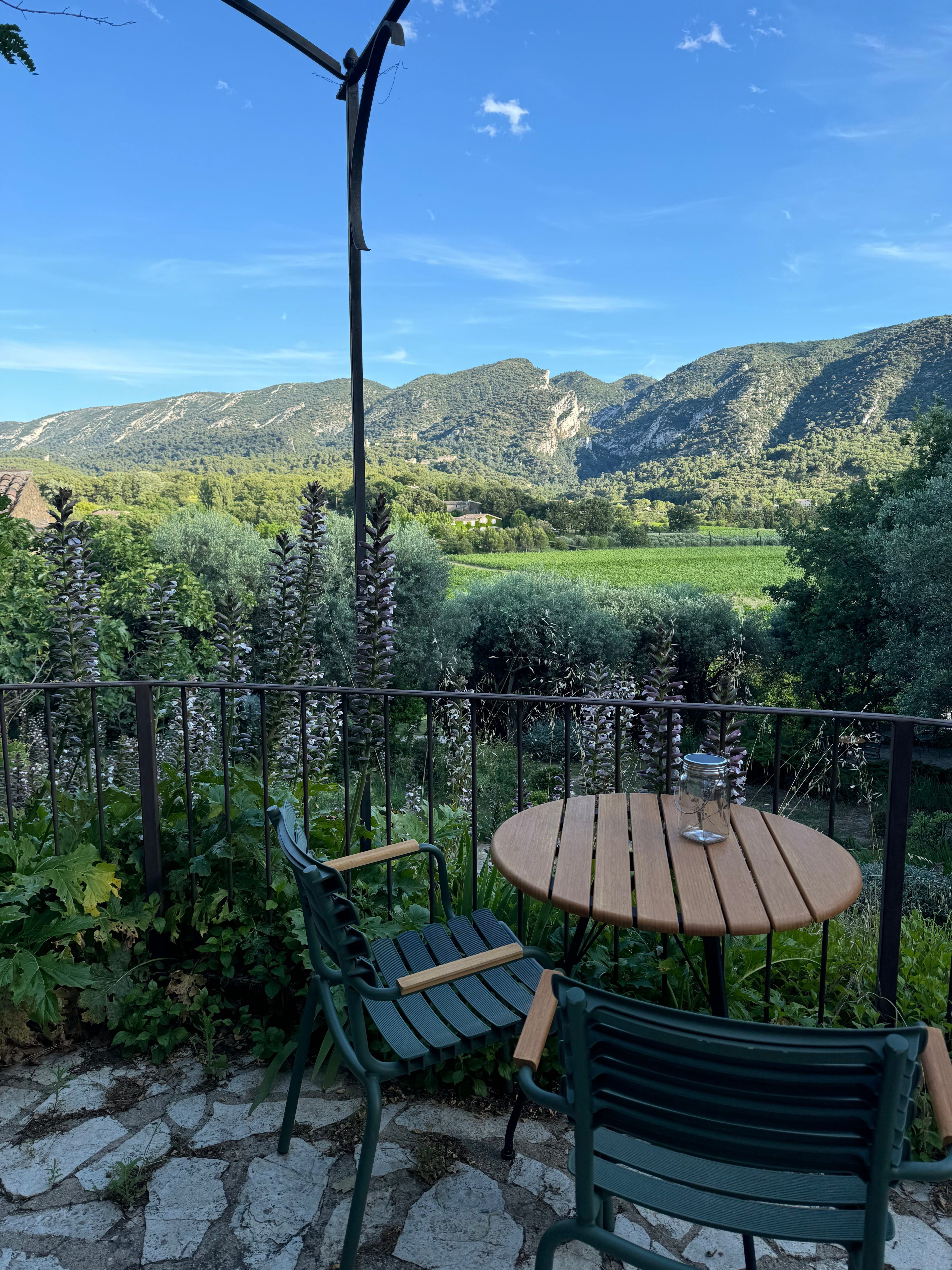
And so, a simple glass of rosé in the sun becomes something more—a small marker of the season turning, of community, of continuity. Spring in Provence has a way of arriving gently, but once it’s here, you feel it everywhere.
Credits
Thank you to Le Farmhouse for permission to share their beautiful quote.
Thank you to Josie from To Fly For for the images of Provence. Check out her gorgeous travel photography!
Thank you to GuildSomm and Ruinart for inspiring all of this research.
Previously in this series:
April: Roussillon—Where Grapes Grow & Wild Boar Roam
March: Love in the Languedoc — A Guide to Southern French Wine